This is Another Socially Engaged Conversation … on anti-racist practices / 6–7 March, 2026

This is Another Socially Engaged Conversation … on anti-racist practices

Date: 6–7 March, 2026
Venue:
Jurányi Labor, Jurányi u. 3., 1027 Budapest / Jurányi Labor is located in the B building, III. floor, the entrance gate opens by pressing the doorbell!


The international gathering taking place on 6–7 March forms part of OFF-Biennale Budapest’s long-term program, which collaborates in various formats with artists and thinkers of Roma origin to explore contemporary forms, possibilities, and limitations of Roma cultural representation, as well as related social issues such as institutional racism. The program—comprising public presentations and a roundtable discussion, as well as closed workshops—marks an important milestone within the international collaborations connected to OFF-Biennale’s most recent edition,
Poems of Unrest (2025), and continues the RomaMoMA project presented at documenta fifteen (2022).

The aim of the meeting is to connect Roma experiences with those of other marginalized, minority, and diasporic communities living in Europe, and to examine how art can contribute to achieving transformative justice in response to structural racism. A key objective of the program is to share good practices and to bring together different forms of knowledge—artistic, academic, and civic/activist.

Historically, the situation of Roma minorities in Europe has most often been discussed in relation to the respective national majorities, and less frequently in comparison with the experiences of other “non-white” European minorities. This program seeks to broaden that perspective: we aim to situate the knowledge of Roma artists and their allies within a wider European discourse on decolonization and justice.

The title of the program was inspired by a painting by the Gypsy Criminals.

Friday, 6 March

17:00 Angéla Kóczé (CEU Romani Studies): Who Cleans the Country? Postcolonial Ambivalence and the Politics of Anti-Roma Racism in Hungary
17:30 Lecture by Quinsy Gario, artist and educator from Curaçao and St. Maarten, based in the Netherlands
18:20 Clara Farkas: Presentation of Bura Gallery (Budapest)
18:40 Hilda Moucharrafieh: Presentation of (A)WAKE (Rotterdam)
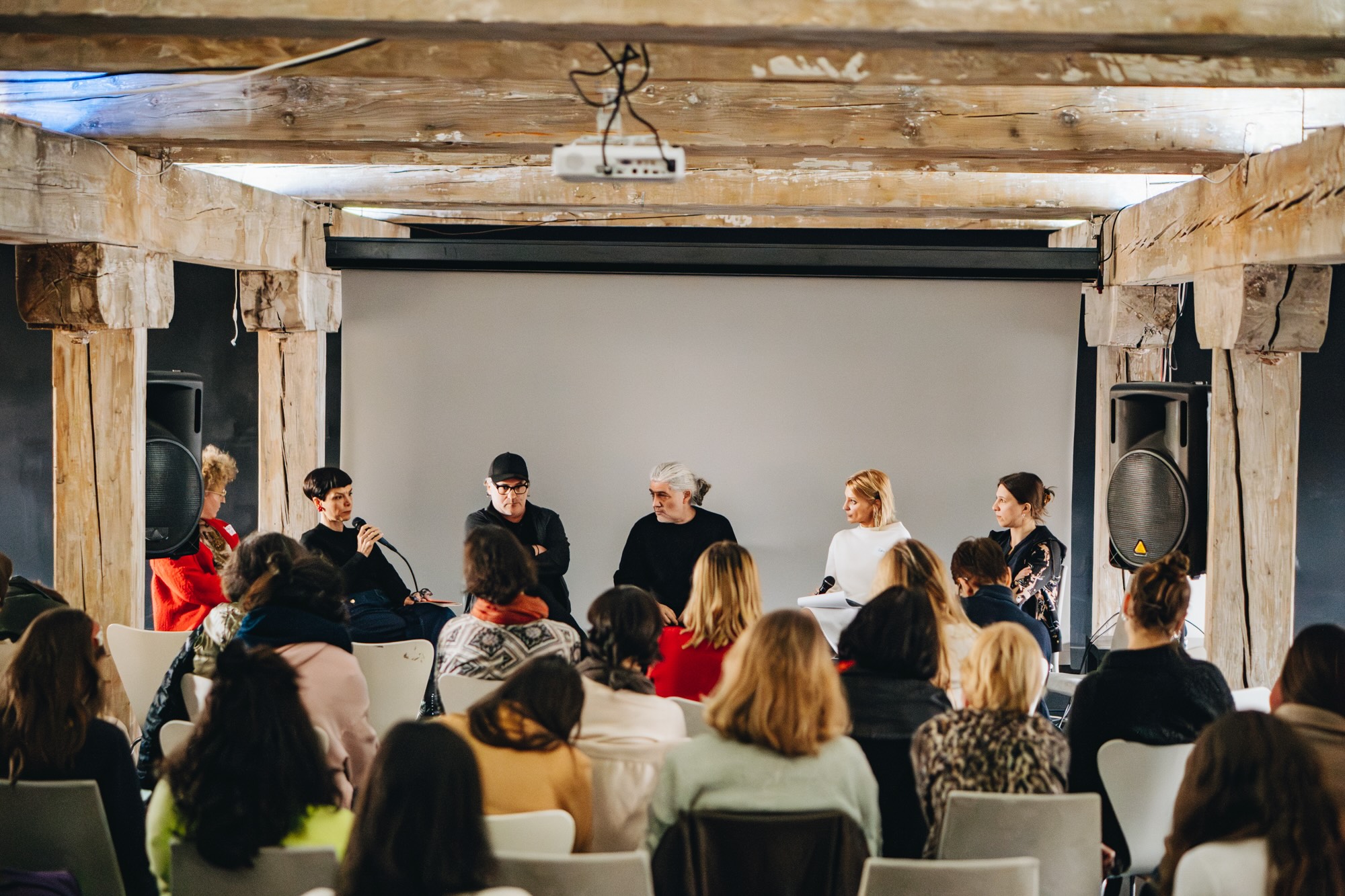
19:20 Roundtable discussion with the speakers, moderated by Judit Ignácz

The Friday event is public and will be held in English.

Photo: Antal Bendegúz © OFF-Biennále Budapest archive

On Saturday, 7 March, the program continues with closed workshops for young artists and professionals, the workshops will be led by Cigánybűnözők, Cat Jugravu, and Hilda Moucharrafieh.

Photo: Antal Bendegúz © OFF-Biennále Budapest archive

The program is organized in collaboration between OFF-Biennale Budapest, Bura Gallery (Budapest), and the CEU Romani Studies Program, with the support of the Embassy of the Kingdom of the Netherlands in Hungary.


(Cover image: Gypsy Criminals, This is another socially sensitive exhibition, 2024, photo: courtesy of the artists)


Open Call for Participation in an International Art Workshop for young artists and cultural professionals

This is Another Socially Engaged Conversation … on anti-racist practices

Open Call for Participation in an International Art Workshop for young artists and cultural professionals

Date: 7 March 2026 (Saturday), 11:30–18:00
Venue: Turbina Cultural Centre, Vajdahunyad u. 4., 1082 Budapest

The program is organized in collaboration between OFF-Biennale Budapest, Bura Gallery (Budapest), and the CEU Romani Studies Program, with the support of the Embassy of the Kingdom of the Netherlands in Hungary.

The context of the program

The workshop forms part of OFF-Biennale Budapest’s long-term program, which collaborates in various formats with artists and thinkers of Roma origin to explore contemporary forms, possibilities, and limitations of Roma cultural representation, as well as related social issues such as institutional racism. The international gathering to be held in Budapest on 6–7 March 2026 marks an important milestone within the international collaborations connected to OFF-Biennale’s most recent edition, Poems of Unrest (2025), and continues the RomaMoMA project presented at documenta fifteen (2022).

The aim of the meeting is to connect Roma experiences with those of other marginalized, minority, and diasporic communities living in Europe, and to examine how art can contribute to achieving transformative justice in response to structural racism. A key objective of the program is to share good practices and to bring together different forms of knowledge—artistic, academic, and civic/activist.

Historically, the situation of Roma minorities in Europe has most often been discussed in relation to the respective national majorities, and less frequently in comparison with the experiences of other “non-white” European minorities. This program seeks to broaden that perspective: we aim to situate the knowledge of Roma artists and their allies within a wider European discourse on decolonization and justice.

The title of the program was inspired by a painting by Gipsy Criminals.

The outline of the two-day program

Friday, 6 March

17:00 Angéla Kóczé (CEU Romani Studies): Who Cleans the Country? Postcolonial Ambivalence and the Politics of Anti-Roma Racism in Hungary
17:30 Lecture by Quinsy Gario, artist and educator from Curaçao and St. Maarten, based in the Netherlands
18:20 Clara Farkas: Presentation of Bura Gallery (Budapest)
18:40 Hilda Moucharrafieh: Presentation of (A)WAKE (Rotterdam)
19:20 Roundtable discussion with the speakers, moderated by Judit Ignácz

The Friday event is public and will be held in English.

Saturday, 7 March

Closed, workshop-based session – This open call relates specifically to this section of the program, schedule:

11:40–12:00: Registration / Doors open
12:00–13:10: Introduction by Gipsy Criminals, Cat Jugravu, and Hilda Moucharrafieh
13:10–14:10: Lunch
14:10–16:00: Workshops
16:00–16:30: Coffee break
16:30–18:00: Presentation of workshop outcomes and group discussion

Participants will work in small groups with one of the above-mentioned artists, engaging with the intersections of racism, exclusion, minority and diasporic experiences, decolonization, and the relationship between contemporary art and activism.

Workshop descriptions

GIPSY CRIMINALS:

In the Dadaist workshop by Gipsy Criminals, participants will create political satire by subverting the claims and language of hate-inciting and populist political propaganda through the tools of irony and humor.
In the first part of the workshop, the founding members of the artist collective will introduce participants to the Gipsy Criminals Manifesto and present their previous works. This will be followed by a creative exercise in which participants produce their own hand-drawn posters responding to the absurdities of our contemporary political reality.

The Gipsy Criminals artist collective was founded in 2024 and defines itself as a Dadaist project. Its aim is to confront anti-Roma racism and xenophobia through critical satire, while also highlighting the sometimes hypocritical attitudes adopted by the art world in relation to these issues. Employing the method of hyper-identification with stereotypes, the collective’s members—MC Lakatos Hunor, Count Nagybányai Horthy Rolex Leonidász, and Hádész Junior, the miniature pinscher—construct a sharp critical narrative infused with humor and irony. As they put it: “We use the term ‘Gypsy criminality’ provocatively because we want to reclaim it from the far-right narrative. No one can prevent the use of this expression, so if that is the case, we assign additional meaning to it and reconstruct the term ‘Gypsy criminality.’” In 2025, Cigánybűnözők presented a new commission as part of OFF-Biennale.


CAT JUGRAVU: REPRESENTATION, RECONSIDERED

The session examines representation as a question of obligation, authorship, and the conditions under which art is produced. Informed by a familiar pressure on marginalised artists: the expectation to explain themselves, to translate lived experience into narrative, and to make their identities legible through cultural production We seek to ask a more fundamental question: is depiction always necessary, ethical, or desired? What if we shifted attention from the artwork to the decisions that precede it—who is expected to speak, who benefits from this speech, and how systems of extraction persist even within gestures of solidarity and self-representation? The session outcome is a method. Participants are expected to develop a heightened awareness of when representation begins to reproduce harm, when authorship becomes ownership, and when withholding becomes a legitimate and powerful artistic position. The 90 minutes workshop provides a transferable framework for approaching cultural work without defaulting to self-exposure or narrative extraction. Representation, Reconsidered, is inviting artists and cultural practitioners, particularly those who identify as Romani, BIPOC and those working in proximity to marginalised communities.It constitutes the first chapter of a broader discursive project: The Lab of Refusal, Responsibility, and Artistic Positioning.

Cat Jugravu (Romanian Romani) is a Berlin-based theatre director, performer, poet, and social worker. Her interdisciplinary practice operates at the intersection of performance, critical pedagogy, and curation, developing collective methodologies that interrogate memory, representation, and cultural authority. She is the founder and artistic director of the QUEERDOS Kollektiv and a core member of the DePART Collective. Through these structures, she facilitates spaces where authorship and visibility are examined as functions of power. Her projects—encompassing performance, installation, and long-term workshops—often function as performative archives, creating shared platforms for knowledge production that challenge extractive cultural norms. Jugravu’s work has been presented in institutional and grassroots contexts across Europe. She approaches performance as a mode of critical inquiry and collective negotiation, centring refusal as a methodology, care as an infrastructural principle, and relational responsibility as the core of ethical practice.


HILDA MOUCHARRAFIEH:

How do we respond to racial discrimination while not falling into the defensive victim trap? In this session, we will craft together approaches and strategies of witty responses that safeguard our dignity and expose the weakness of bigotry. We will base this on actual statements by politicians and TV media figures, or perhaps a discriminatory law or an oppressive state regulation from your own contexts. During the workshop session, Hilda Moucharrafieh will share inspiring examples of cultural resilience from her artistic practice as well as from her lived contexts of Lebanon and The Netherlands. However, the material (whether text, visual, or situation) will be brought in by the participants, reflecting their socio-economic situations, and political realities.

Hilda Moucharrafieh is an artist, tutor and cultural practitioner based in Amsterdam. Through her artistic research practice, she makes artistic interventions in public space with mediums that are site-specific and stemming from research. Her work tells stories of people that are excluded from the dominant narratives, which are not reflected in the designed spaces of the city, its public squares and historical monuments..Hilda Moucharrafieh holds a BA in Graphic Design from Lebanon, and an MFA in Scenography from the University of the Arts Utrecht (HKU), The Netherlands, where she has been a tutor at the Master Scenography programme since 2017. In 2016-2017 she was a fellow at the Home Workspace 10-month program at Ashkal Alwan, Beirut, Lebanon. Since 2021, Hilda Moucharrafieh is part of the artistic team at (A)WAKE in Rotterdam, as well as an advisor for scenography, performance and theatre design in the Design Jury Committee at the Creative Industries Fund in Rotterdam. She collaborates across disciplines to foster solidarity, and also co-directs Platform BK advocating for better art policy in the Netherlands.

Who can apply?

Young Roma and non-Roma artists, curators, cultural workers, students, and early-career professionals based in Hungary.

Applicants should have an interest in:

  • the contemporary artistic engagement with Roma and other minority experiences,
  • anti-racist and decolonial approaches,
  • the intersections between artistic practice and social justice.

Participation requires proficiency in English, as the workshop will take place with international participants and the working language will be English. The Gipsy Criminals workshop will be held in Hungarian.

How to apply

Applications can be submitted by completing the following Google form: https://forms.gle/m49UcEiTMGxCPqGD7

Workshop preferences will be taken into account as far as possible when forming the groups.

Deadline

Application deadline: 2 March 2026 (Monday), midnight.

Selected participants will be notified by email after the application deadline.


(Cover image: Gipsy Criminals, We Protect You …, 2025, photo: Flóra Dobos © OFF-Biennale Budapest archive)
Report on the Summit of the Independents

Report on the Summit of the Independents

OFF 2027 opening day and what follows afterwards

On November 8, at aqb, we publicly launched the preparations for OFF-Biennále Budapest 2027 with nearly 100 participants.

The full-day professional and community event brought together representatives of independent cultural organizations, members of the contemporary art scene, and interested participants for a shared discussion aimed at mapping the current operational frameworks and challenges of Hungary’s independent, self-organized contemporary art ecosystem, while also presenting our plans for the next OFF-Biennale.

Collective Thinking Begins

Tímea Török, who lead the mediation program of OFF2025, helped participants get acquainted and “warm up” for the day-long discussion through an interactive situational game.

This was followed by presentations from members of the OFF strategic board — Nikolett Erőss, Katalin Székely, and Hajnalka Somogyi  — who outlined:

– the framework of the 2027 Biennale,
– the key details of the open call launching in January 2026,
– and the possible forms of collaboration.

About the Open Call in Brief
The OFF-Biennale will launch an open call in January 2026 for participants based in Hungary. The selected projects will take part in regular professional meetings and community platforms throughout 2026–2027, where we will primarily provide coordination and curatorial consultation. The aim of the program is to strengthen conceptual cohesion, support collective thinking, and foster sustainable structures of collaboration, while preserving the autonomy of the individual projects. We are looking for proactive participants who are ready to take responsibility and share knowledge and resources.

Photo: Antal Bendegúz © OFF-Biennále Budapest archive

“The Opportunity Lies in Collaboration and Networking”

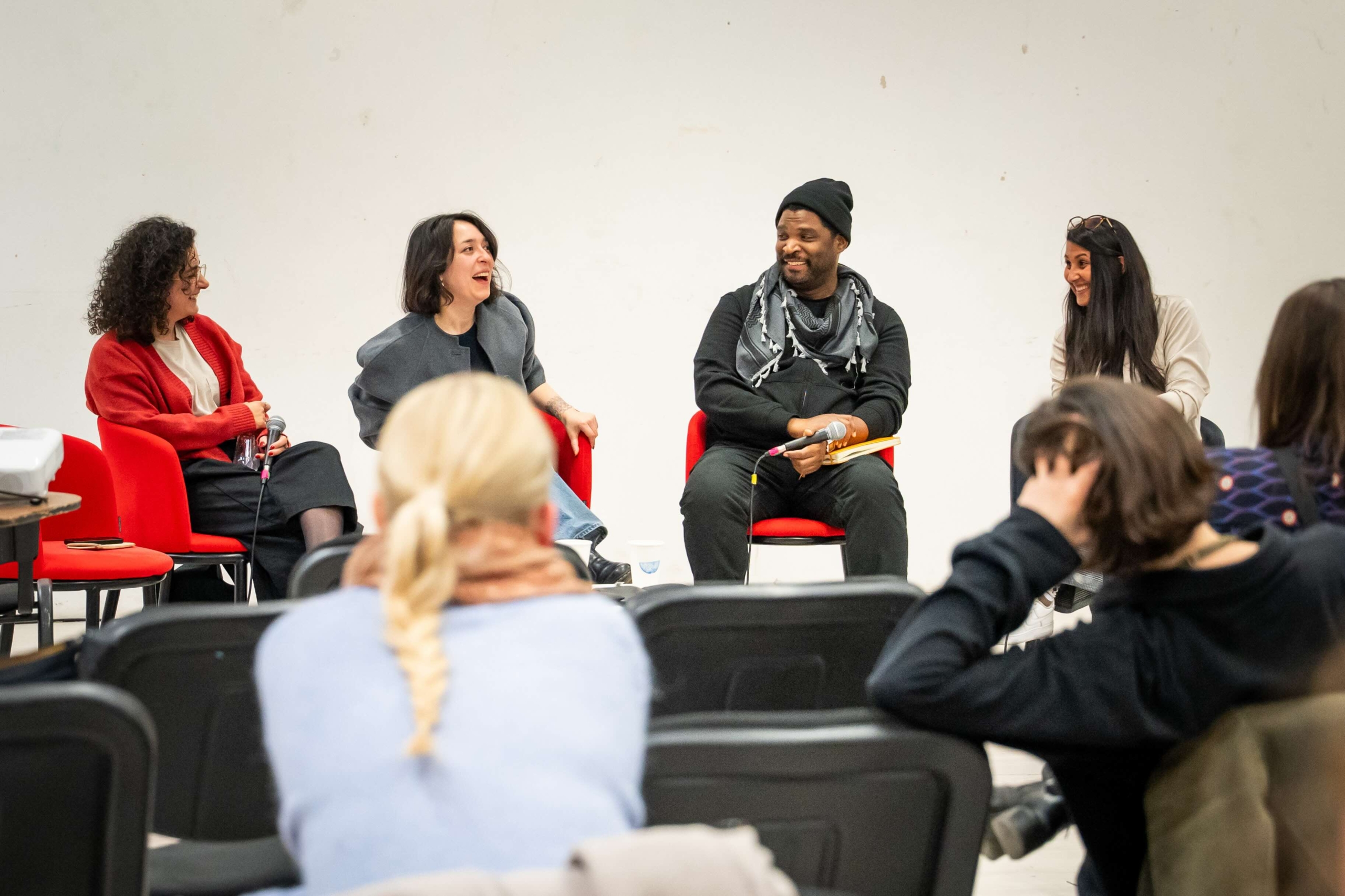
We closed the morning session with a panel discussion featuring Katalin Erdődi (Trafo), Nikolett Erőss (Budapest Gallery, OFF-Biennale Budapest), Péter Forgács (FreeSZFE), Attila Menesi (Kontextus Program) és Luca Petrányi (Useless Galeri) Together, we explored how institutions and independent actors can genuinely collaborate as equal partners within today’s cultural ecosystem.

The participants reflected on the meaning of independence, the possibilities and limitations of institutional frameworks, and the role of collaboration and networking, emphasizing the importance of professional autonomy, sustainability, mutual support, and interdependence as an opportunity rather than a constraint.

The discussion highlighted that collective thinking and the development of new operational models are essential prerequisites for creating an open and supportive cultural environment grounded in solidarity.

Photo: Antal Bendegúz © OFF-Biennále Budapest archive

Self-Organization and Community Building in Practice

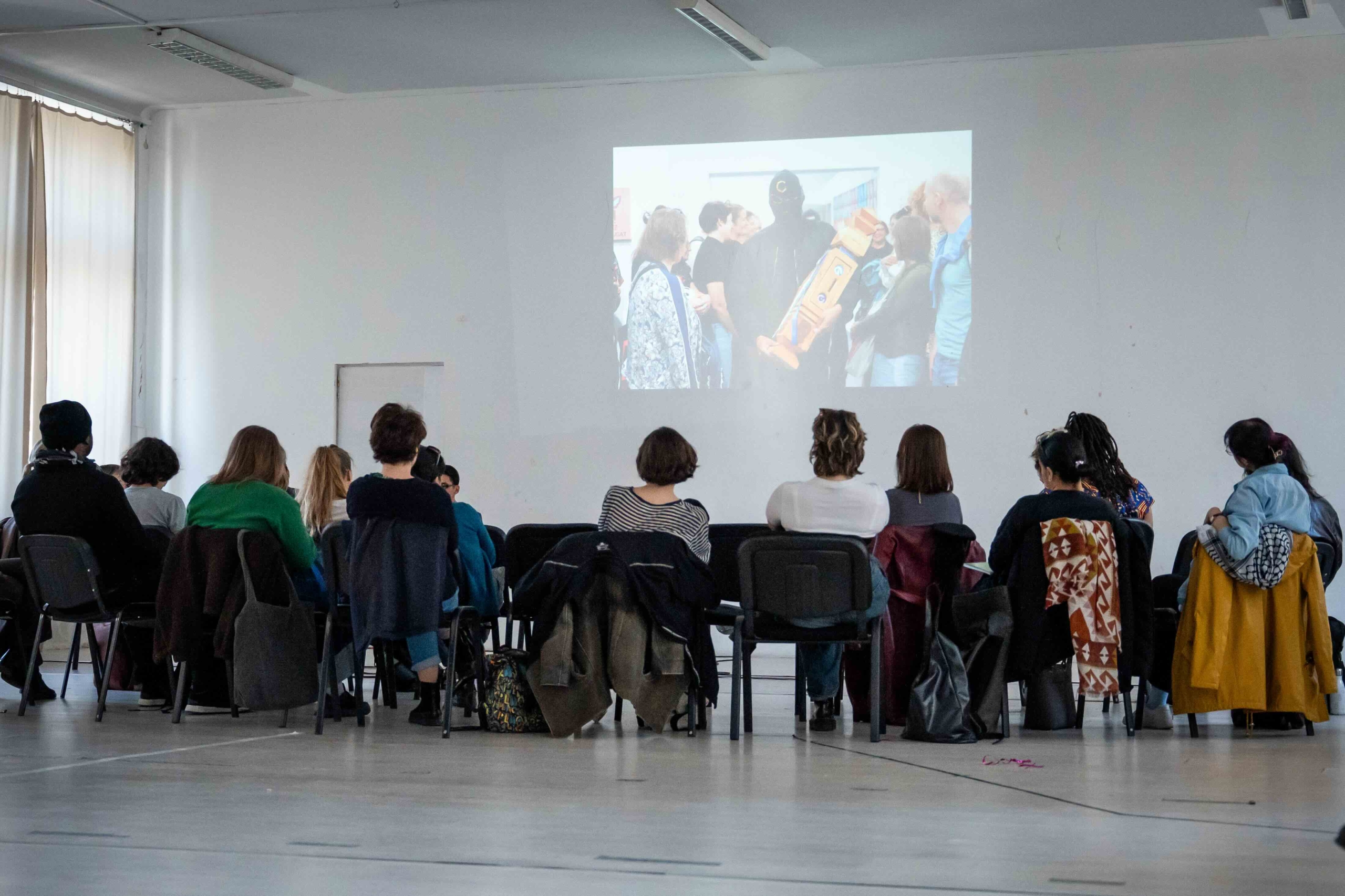
During the afternoon, The School of Public Life (Közélet Iskolája) led a practical workshop titled Self-Organization, Collaboration, and Community Building, examining how effective cooperation and self-organization can function within the cultural scene, and what role collective work plays in culture and in driving social change.

Participants reflected together on the significance, challenges, and benefits of collaboration, and then, through group work, developed the vision and mission of fictional organizations.

The workshop was based on the recently published Group Organizing Handbook, which condenses more than a decade of experience in the practice of self-organization.

Photo: Antal Bendegúz © OFF-Biennále Budapest archive

Independence in the Film Sector

The day concluded with a conversation featuring Kristóf Horváth and Tamás Szalai, two founders of BIFF (Budapest International Film Festival). The discussion explored the festival’s history, the meaning of independence, different funding models, and the possibilities for collaboration between the visual arts and film scenes.

What Comes Next?

We will soon share detailed information about the open call (available only in Hungarian).

In the meantime, follow us on our social media platforms, and if you haven’t already, subscribe to the OFF-Biennále Budapest newsletter here.

The Summit of the Independents – OFF 2027 kick-off day / November 8, 2025

The Summit of the Independents

With the conclusion of the fifth edition of OFF-Biennale and building on the organization’s ten years of experience, preparations for the 2027 edition have begun. As one of the first steps in this process, OFF is organizing a professional and community event aimed at mapping the current operational frameworks, challenges, and possible directions for development of the independent, self-organized contemporary art ecosystem in Hungary and the region. The event will also provide a platform for cultural organisations and their representatives to discuss opportunities for collaboration in order to strengthen the visibility and social relevance of the critical, progressive art scene.

Since 2015, OFF has employed various organizational and operational models. In the current situation of the cultural sector—marked by increasing shortages of resources, systemic institutional deficiencies, fragmentation within the civil sphere, and the bleak prospects of long-term planning—OFF intends to return to the mission of its first edition. Accordingly, in the coming period the focus will be on bringing together and amplifying the energies of the independent contemporary art scene. OFF will seek to do this by providing space for projects of independent artists, art professionals, groups, and organizations; as well as for dialogue, free creation, cooperation, and mutual support. In addition, OFF will aim to foster the international networking of the local artistic and professional community and help it reach wider audiences.

Date: November 8 , 2025 / 10:00 — 19:00

Place: aqb Foyer, Budapest

*Please note that the event will be held in Hungarian!

PROGRAM

10:00–10:30 — Registration, arrivals
10:30–11:00 — Icebreaker with Timi Török
11:00–12:30 – OFF Block: Past, Future, Participation
Where does OFF stand today, and where are we heading?
In the OFF Block, we’ll share the plans for the next year and a half, introduce the new operational framework, and discuss opportunities for participation and open calls.
12:30–12:45 — Coffee break
12:45–14:00 — Panel discussion
Rethinking collaborations — between institutions and civil actors
How can institutions and independent players work together today as truly equal partners within the cultural ecosystem?
What new models and modes of operation can support collective thinking, sustainable dialogue, and interconnected work?
Our panelists:
• Katalin Erdődi (Trafó)
• Nikolett Erőss (Budapest Gallery)
• Péter Forgács (FreeSZFE)
• Attila Menesi (Kontextus Program)
• Luca Petrányi (Useless Galeri)
14:00–15:00 — Lunch break
15:00–17:30 – Self-organization, collaboration, community building – practical workshop with The School of Public Life
Social change begins within communities — in groups where roles are clear, decisions are made democratically, and goals are shared.
In September, the School of Public Life presented its Group Organizing Handbook, which condenses more than ten years of training experience and serves as the foundation for this workshop.
The organization’s mission is to make the knowledge and tools necessary for self-organization accessible to everyone. As a movement-based background institution, it supports activists and civil organizations in working more effectively through trainings, strategic planning, participatory research, and publications.
17:30–18:00 — Coffee break
18:00–19:00 — Independence in the film sector — experiences and lessons learned
What possibilities exist today for independent operation in the film industry?
Together with the team of the Budapest International Film Festival (BIFF), we’ll discuss how it’s possible to create and sustain a truly independent yet internationally relevant cultural event in Hungary today.
The BIFF – Budapest International Film Festival is Hungary’s newest international film festival, now taking place for the second time.

Home: An art project on housing

Home: An art project on housing

Budapest, May 17 – 24, 2019

In the former premises of the Otthon Department Store, 13 emerging visual artists reflect on the concept of home, their relationship to their own living spaces, and the challenges arising from the housing crisis.

The housing crisis, as a widespread and systemic issue, affects not only marginalized social groups but also young people, families, and the elderly alike. In addition to the exhibition, performative events address questions of cohabitation and homelessness. A professional roundtable discussion with invited experts offers a broader perspective on the historical background of the housing crisis, the current situation, and possible alternative models.

Alongside this program, architecture students from MOME engage with the topic of social housing. Through their project work, they transform the site of a former set storage facility into community-oriented spaces that may provide alternative housing solutions within an overburdened urban environment. Films depicting various housing situations, curated by the Verzió Human Rights Documentary Film Festival, DAAZO Shortfilms, and the grassroots organization The City Is for All, will also be screened.

The Home:An art project on housing program series is the diploma project of students from the Art Theory Department of the Hungarian University of Fine Arts. Its realization was supported by the OFF-Workshop Budapest program led by the OFF-Biennale, with the support of the Summa Artium Foundation.

Photo: Mátyás Borsos

Photo: Mátyás Borsos

Participants: AU Workshop, Anna ÁDÁM, Csönge BALLA, BOTTOM UP, Eszter HORVÁTH, Ádám JENESES, Mártha KICSINY, Attila LAKATOS, Tünde MÉZES, Bálint MISETICS, Judit Lilla MOLNÁR, MOME Master’s students of the Institute of Architecture (Viola Bálint, Olivér Bartha, Máté Gadolla, Dániel Lengyel, Katalin Gencsi, Veronika Róza Háló, Evelin Murczin, Krisztina Anna Németh, Renáta Pomázi, Dorottya Seenger, Ákos Sógor, Áron Szabó, Rákhel Szabó, Dávid Székely, Marcell Szodfridt, Gergely Tasnádi, Bence Varga, Adrienn Veres), MOME Design Culture students (Éva Antal, Brigitta Ádi, Luca Csíkszentmihályi, Lilla Gollob, Vivien Kádi, Anna Karsai ), Zsuzsanna PÓSFAI, Dávid SMILÓ, STEREO Akt, Márton SZARVAS, Lili THURY, Balázs VARJU TÓTH, Szabolcs VIDA, Willany Leó Improvizációs Táncszínház
Curators: Borka CSEJDY, Réka ÖLVEDI, Dénes PETÁK, Fanni SOLYMÁR

Opening: May 17, 2019, 18.00-22.00
Finissage: May 24, 2019, 19.00-22.00
Address: ex-Otthon Áruház, 1074 Budapest, Rákóczi út 74-76.

Photo: Szabolcs Vida

Gaudiopolis – Attempts at a Joyful Society

Gaudiopolis – Attempts at a Joyful Society

Leipzig, March 10 – July 18, 2018.

Zero hour: After World War II, a community is formed in Budapest. The children’s republic of Gaudiopolis takes in hundreds of orphans – independently of their religion, social background, or nationality. The characteristic aspects of solidarity and active participation, which Gaudiopolis and earlier children’s republics of the 20th century stand for, will be presented in the historical part of the exhibition. Questions of how to live together respectfully will be discussed through works by contemporary artists and addressed in participatory projects. In the light of current social division, Gaudiopolis exemplifies a joyful and supportive community that is aware of its internal conflicts and, nevertheless, focuses on its diversity in order to expand its possibilities.

Exhibiting artists: Gabo Camnitzer, Uta Eisenreich, Alia Farid, gruppe finger, Laura Fröhlich, Ryan Gander, Binelde Hyrcan, Bernd Krauß, Manuel Pelmuş, Michael Rakowitz, Christoph Ruckhäberle, Javier Téllez, Mona Vătămanu & Florin Tudor, Anna Vovan, Anna Witt, architecture uncomfortable workshop

A cooperation with the OFF-Biennale Budapest, Museum of Contemporary Art LeipzigVera & Donald Blinken Open Society Archives Budapest and The Young World Theatre.

Communities of practice – OFF Practitioners’ symposium and meetup

Communities of practice – OFF Practitioners’ symposium and meetup

Budapest, September 18, 2015

The symposium organized by OFF-Biennale Budapest focuses on how grassroots initiatives operating within challenging political circumstances can support or even uphold contemporary art in a certain locale and rethink its role and competence. “Communities of Practice” links international cultural practitioners who endeavour specific, alternative models of operation. The aim is to present and analyse case studies of self-organized initiatives that are especially responsive to the social and political contexts they are embedded in.

Various presentations and panel discussions will explore the dilemmas inherent in self-organization and participative operations, such as the relations of continuity and responsiveness, local focus and international approach, the issues of advocacy, representation and responsibility, the relation of artistic-curatorial collectives to institutional modes of operation or the potential clash between democratic decision-making and effectiveness.

10.00 – 10.10 am Welcome by Tijana Stepanovic / OFF-Biennale Budapest
10.15 – 10.40 am Storytelling through a Biennial, the Case of the Athens Biennale / Poka-Yio artist, co-director of the Athens Biennale
10.40 – 11.05 am I like Periferic 3 / Livia Pancu, Iasi
11.05 – 11.30 am Lost and Found in Transition: Space between Art and Politics / Romeo Kodra, Tirana Art Lab
11.30 – 11.50 am coffee break
11.50 – 12.15 pm CRVENA: Feminist Practices, Art and Politics Intersected / Adela Jušić, Association for Culture and Art CRVENA
12.15 – 12.40 pm Time of Collectivity / Anna Zvyagintseva, member of Hudrada collective, Kiev
12.45 – 2.15 pm lunch break
2.15 – 2.40 pm The Politics of Art and Labour within the Bucharest Art Scenes / Veda Popovici, Bucharest
2.40 – 3.05 pm Reclaiming Public Space through Artistic Practices / Vladimir Us, Oberliht Young Artists Association, Chisinau
3.05 – 3.30 pm Constituent Spaces, New Institutions and Production / Chiara Colasurdo, Teatro Valle Occupato, Roma
3.30 – 4.00 pm coffee break

PANEL DISCUSSIONS:

4.00 – 5.00 pm Continuity

In the face of constant political, economical and social earthquakes how can we keep up with our former activities? How can we, and to what extent do we want to respond to these changes? How does an altered political, social and economical environment influence our attitudes, agendas, policies, programmes, and our entire practice? What measures do we take, as organizations or as individuals, to continue even against the grain?

Participants:
Chiara Colasurdo / Teatro Valle Occupato, Rome; Tímea Junghaus / Gallery 8, Budapest; Romeo Kodra / Tirana Art Lab, Tirana; Livia Pancu / Iaşi; Vladimir Us / Oberliht, Chişinău
Moderated by Katalin Székely / OFF-Biennale Budapest

5.00 – 6.00 pm Collectivity

How does collective curating challenge the curatorial roles as we know them, and the responsibility inherent in decision making? Is it really the operational structure of a collective which secures its effectiveness or on the contrary: structures are to restrain the sometimes unconscious dynamic of a community? Democratic decision making is the ideal format for many of us, but how to shape and sustain democracy in a larger group and how to avoid project-based operation or effectiveness to fall prey to it?

Participants:
Adela Jušić / Crvena, Sarajevo; Dávid Karas / FKSE, Budapest; Poka-Yio / Athen Biennale, Athens; Veda Popovici, Bucharest; Anna Zvyagintseva / Hudrada, Kiev
Moderated by Nikolett Erőss / OFF-Biennale Budapest

The conference will be held in English.
Entry is free.

Main supporters of the OFF-Biennale Budapest: EEA/Norway NGO Fund, Open Society Initiative for Europe, Erste Stiftung